
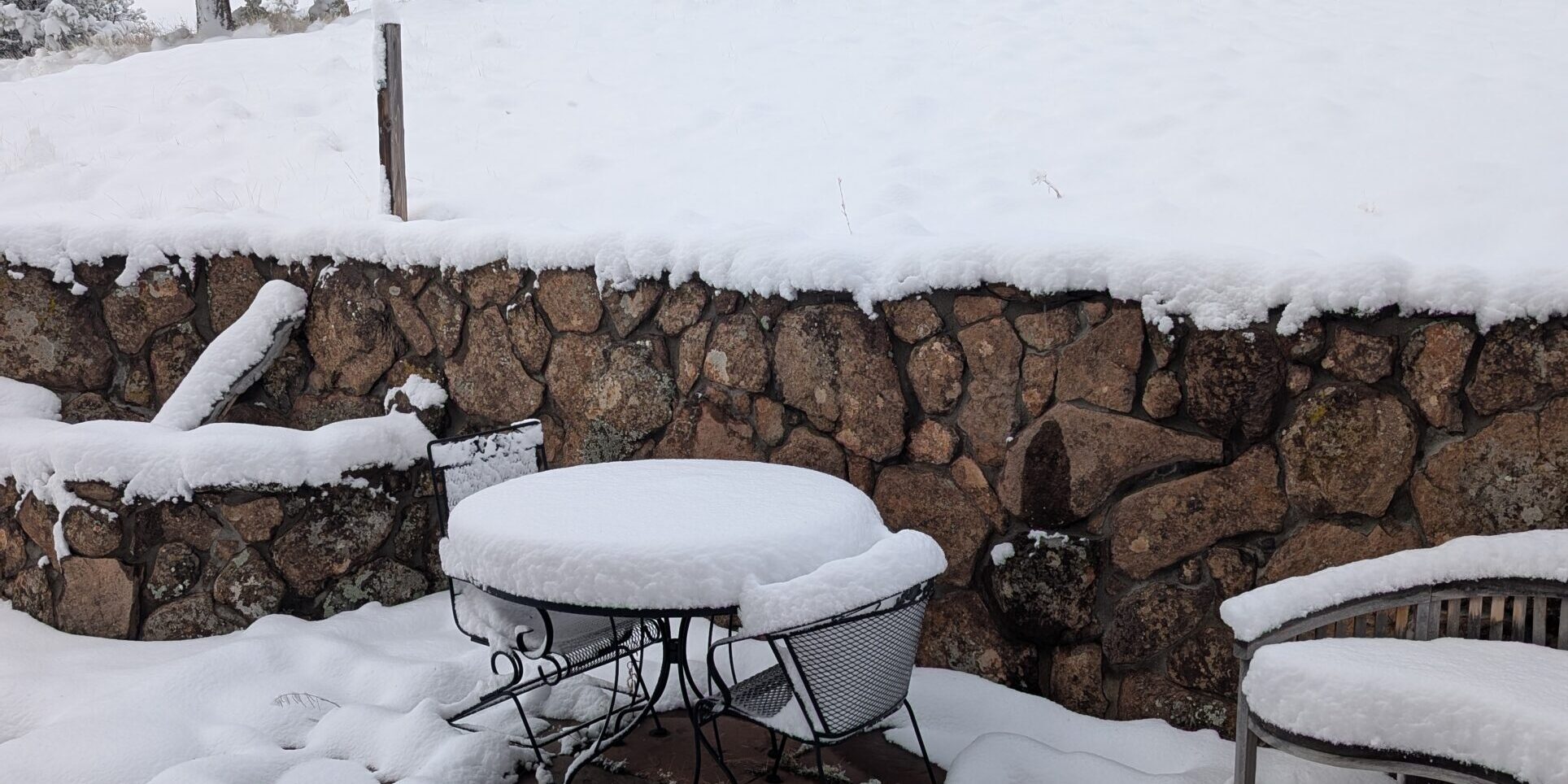
It’s still April, but barely.
In the dark of the earliest hours of the 30th, I wake to pitch dark and silence.
Unusually dark and silent.
Electricity’s out.
I try to go back to sleep—the conditions are ideal, after all—but disturbing thoughts about the possible cause of a power outage insert themselves. What steals into my no-longer-sleepy brain are not the scenarios that have become increasingly plausible in America’s West, of a preemptive shutdown designed to prevent a utility-related wildfire ignition, or a wildfire itself. Instead, my restlessly paranoid thoughts are of Armageddon. I toy, more than once in the ensuing hours, with the idea of getting up to see if Pikes Peak is backlit by the glow of a firestorm ignited by a nuclear strike on Colorado Springs (Sorry, dear friends in Colorado Springs. We must get together soon). My brain, it seems, has been jotting notes from my tightly regulated forays into non-local news.
Had I gotten up, I wouldn’t have seen a lurid glow, and not just because nobody is bombing the country at this time. The horizon—all of it, regardless of direction, including to the northeast where Pikes Peak routinely hunkers—is socked in with cloud. In the monochrome pre-dawn of 5:26 a.m., when I do finally get up and find my phone, it becomes clear that the likely explanation for our outage is snow-laden tree limbs snapping and bringing down power lines. The half-inch of snow in last evening’s local forecast has multiplied itself more than ten times over.
Doug gets busy fetching wood and crumpling paper to build a fire; the heat has been off since before midnight, and it’s chilly. I swipe the matches from him to light a few candles and a burner on the gas cooktop, putting on water for tea.
It occurs that my silly brain can be forgiven for not realizing that the electricity might have failed for snow-related reasons. We’ve barely had any of the white stuff this winter. In fact, if the forecast holds and more snow falls overnight, this will be the biggest snowfall event to hit our area since November of 2024.
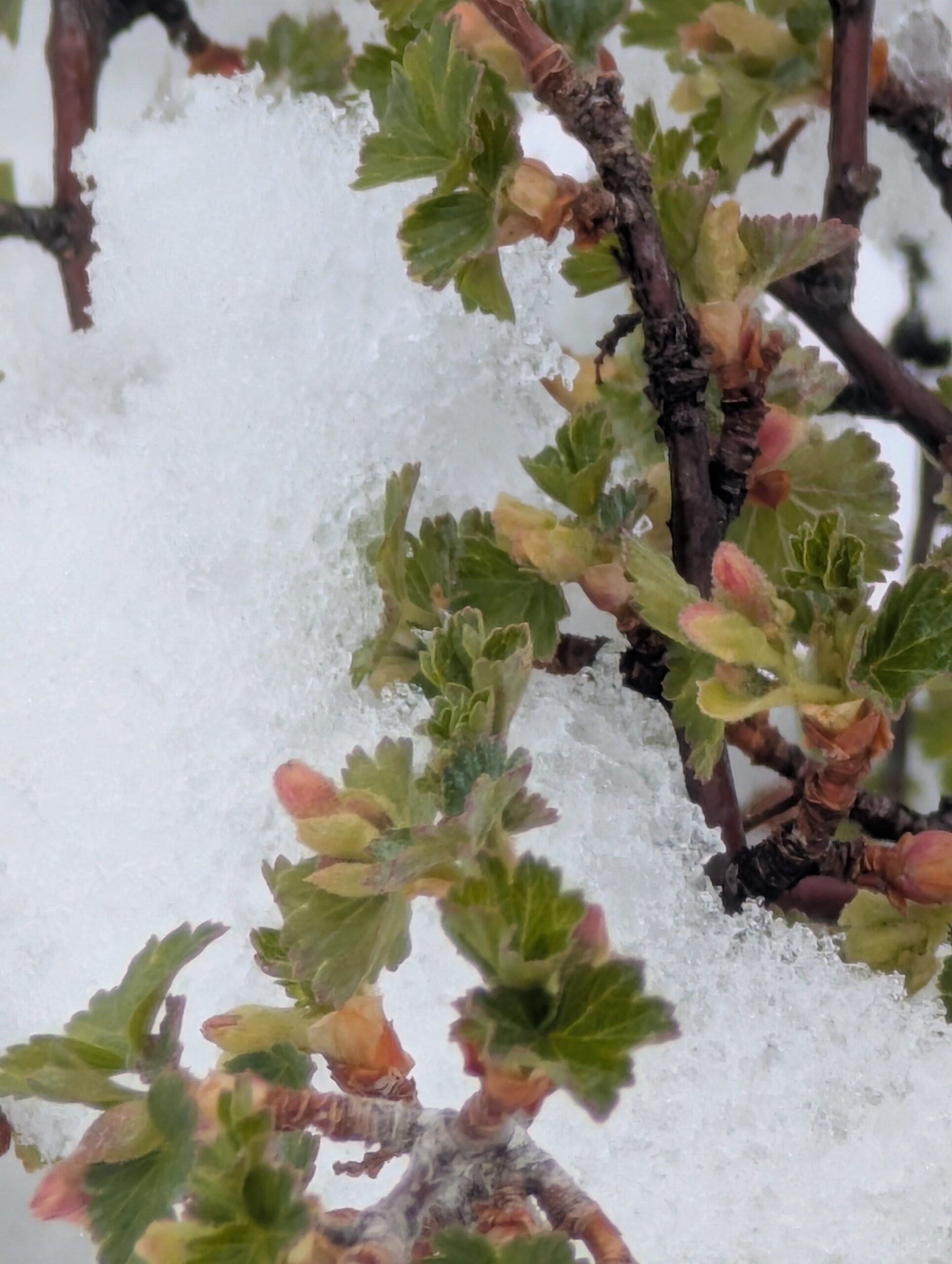
Here’s hoping, for the sake of the birds, that the flowers on the smooth currants are tough enough to withstand the coming cold.
When Doug comes back from feeding the horses, I’m sitting in front of the fire. There’s plenty I can—should—be doing, but I don’t wanna. This feels like something other than the usual instinct for procrastination.
It’s been so warm this winter we’ve hardly used the fireplace. In a “normal” year, we build a fire almost every evening from November through March, and keep one burning all day long on days when it’s snowing or cold and cloudy. This past March, I threw windows open more often than I built a fire.
I want a snow day. Declaring a snow day signals a desire to be inside, by the fire. A snow day means reading takes precedence over work. A snow day is cozy and indulgent. It is nothing like a wind day, which we’ve had plenty of lately. Wind days are aggravation and a sense of forced confinement.
I always want to play hooky when it’s snowing, but the inclination is particularly strong today. I eventually track the impulse down to the wash of relief that hit at 5:27 this morning, when I looked outside and saw so much more snow than I expected. The wet is a stay, however temporary, against the creeping tension of a wildfire season that promises to be long and fierce. One storm doesn’t break a drought, and a couple of snowy days won’t hold red flag warnings at bay for long. But this morning the sense of release is powerful, and it inclines me to settle in the chair near the fireplace, feet up on the ottoman, book in hand. The irony of feeling so powerfully drawn to fire as a break from worrying about fire is not lost on me.
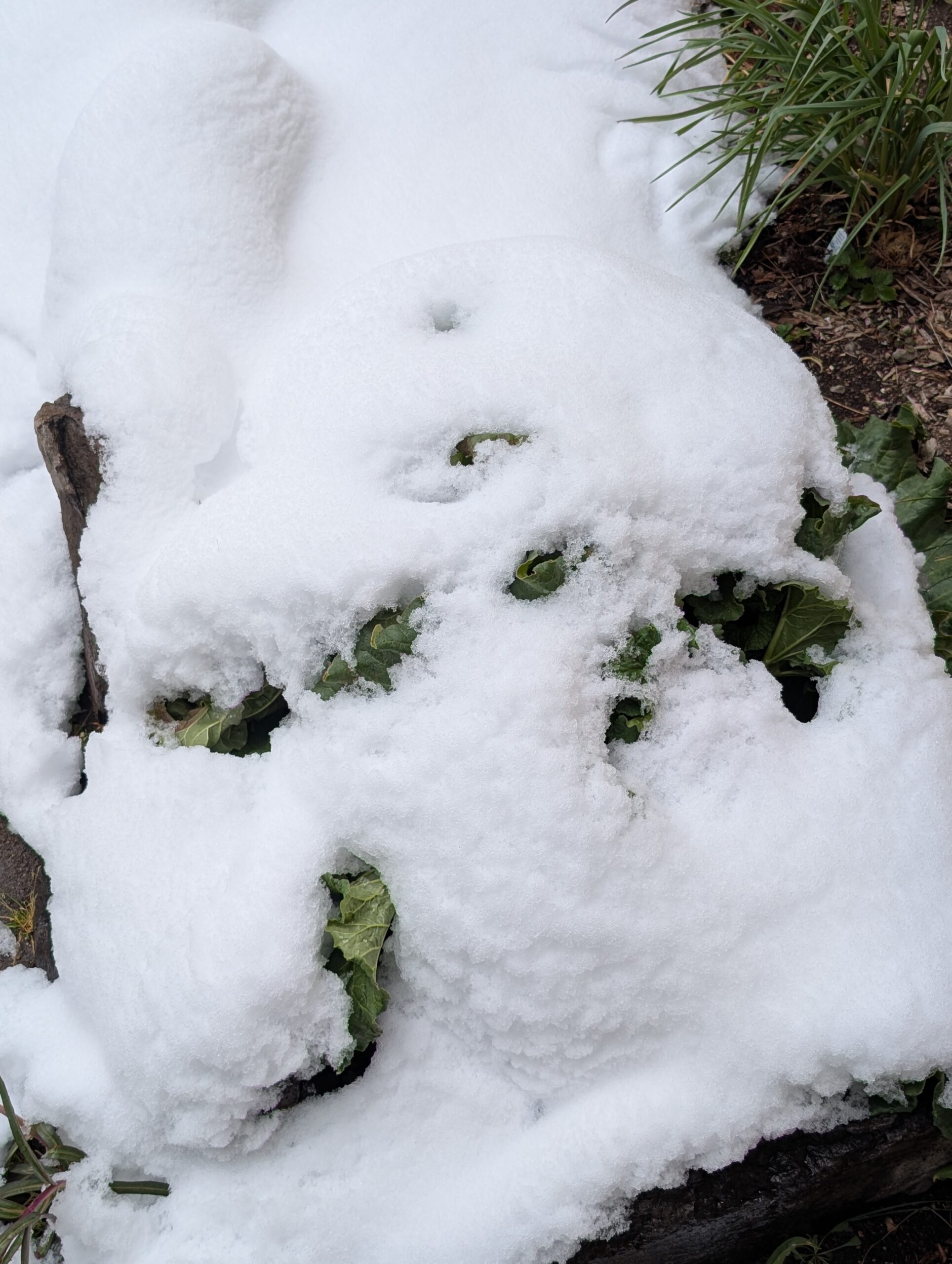
Rhubarb on the way to losing its insulating blanket.
Doug has appointments in town, though, and he leaves. A snow day is less fun alone. As the log in the fireplace burns down toward ash, I finish a page in my journal. Rather than adding more wood to encourage the embers back toward flame, I get dressed and go for a walk. The snow is practically gone off the roads already. The ground is so dry the slop of mud and slush won’t last long.
I throw the juncos some birdseed and the horses a flake of hay. The latter have been shedding, are practically down to slick summer coats. We’ll keep the hay rations stepped up, stoking their internal furnaces. They have shelters, and it’s not supposed to be windy. Harper will be outraged at the temperatures the next two nights, but she’s going to be happy when this moisture brings on the grass at last.
I putter in my office, tinkering on this piece. I tidy the kitchen and bring in wood, more than we’ll need this evening. We have nowhere to go tomorrow, and with luck the snow will still be coming down when we wake up.




Sad, and also understandable, that worries about catastrophe are never far away. Wishing you plenty of respite from fires and worries.
I suppose the worries have always been there, Michael. My grandmother was certainly a champion of the weather-related fret! The frequency is wearing though, isn’t it?
What a lovely read, capturing this drought season and its occasional, treasured reprieves. Appreciate your writing very much.
Thank you so much, Jenny-Lynn. Capturing reprieves is beginning to feel like a survival skill for the times, I think.
We have a rule, down here in Denver, that we get an afternoon cup of hot chocolate when it snows. That may have happened twice this past winter. And today, in the 40s all day, we were promised rain at last. So far nothing. Your desire to sit by the fire and read made me think, yes, being snowed in is a day off. We’re used to having several every winter and we’ve had none. Besides our national disaster, maybe that’s why we’re so worn.
Pat, it’s all wearing, isn’t it? Love the hot chocolate rule, we need to steal that. I’m trying to think how to game the standards to claim a random day now and again, weather be damned.
By all means, steal that rule!
As usual, you use details so well to convey a theme. Here in Cañon City we got some moisture but no actual rain. Probably evaporated before it hit the ground. The weather has become such an obsession. I long for the smell and sound of rain. Glad you got some though— I always feel it’s better to have it in the rural areas than here in town. Thank you, Laura
Laura, So glad to have you here. What a bummer to hear not much precip fell in Canon. The ground everywhere needs it, but our spirits do too….
Snow Armageddon is the best!
Hans, I have to confess that snow is easier to take this time of year, when it comes, does its job, and leaves.