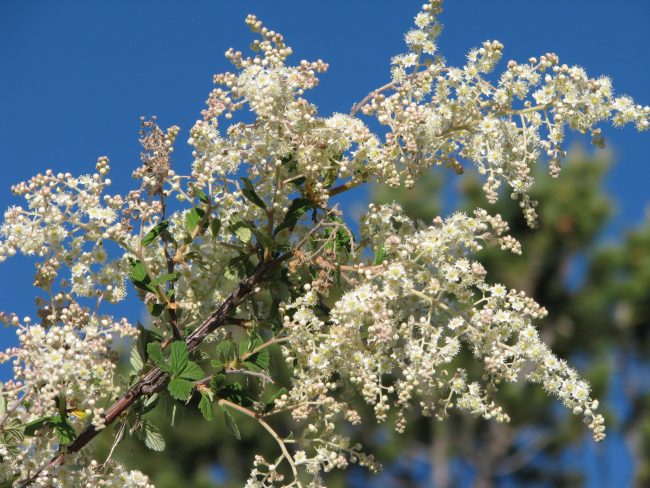
Mountainspray
A little evanescent froth for these dry mountains: the blooms on these shrubs are dramatic while they last, but they don’t last long. Holodiscus dumosus: a bush that knows how to play with light.

A little evanescent froth for these dry mountains: the blooms on these shrubs are dramatic while they last, but they don’t last long. Holodiscus dumosus: a bush that knows how to play with light.
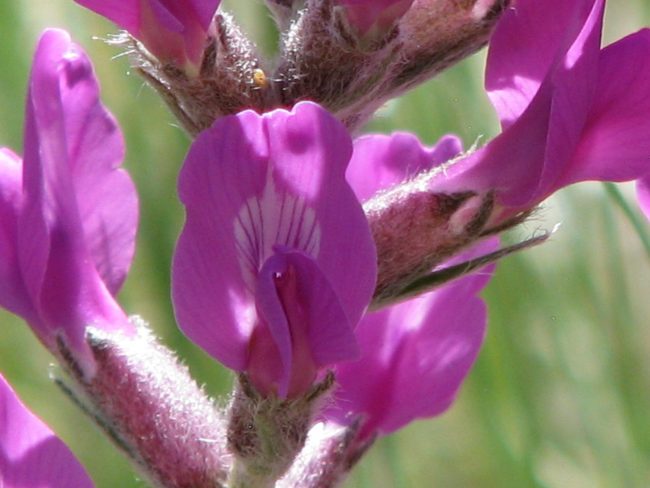
While Silky locoweed blooms early, with thick clusters of white and palest lavender flowers, this Oxytropis blooms later and louder, and with slightly more airy spacing between the flower spikes.
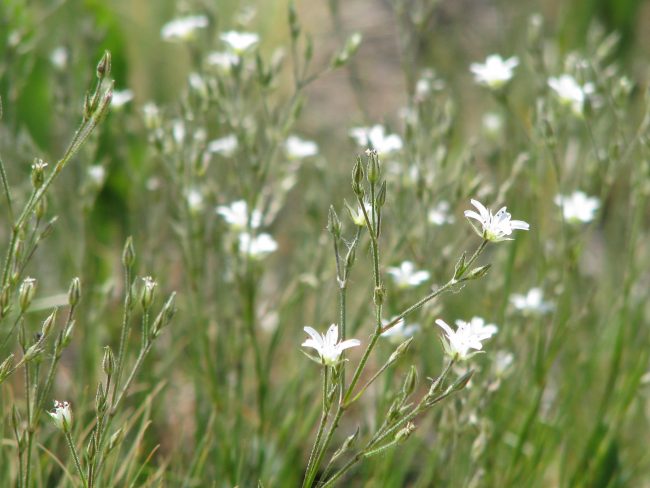
If ever the word “spangle” is to be applied to a western wildflower, surely this is the one. Multitudes of little white flowers on wiry stems spangle the grasslands (or, if you prefer the noun form of the word, that works too: little white flowers like spangles in the grass). Eremogone fendleri For many years…
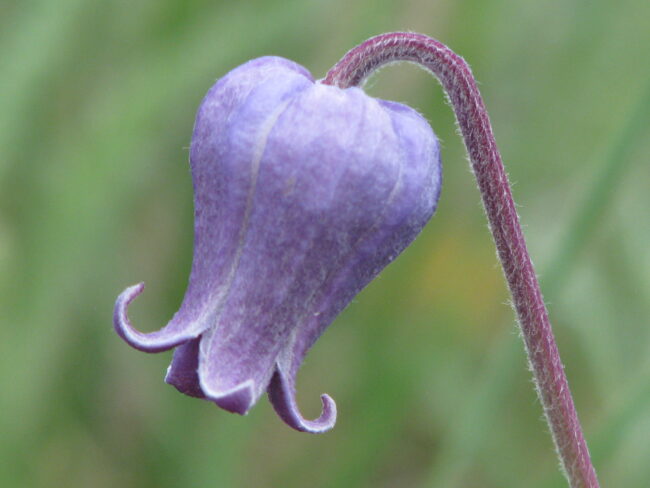
Clematis hirsutissima Like the Harebells I featured last week, Sugarbowl are turning up in clusters, an unexpected abundance. I appreciated that this particular plant also shows off the seedheads, which are a delight in themselves. The flowers make me smile whenever I see them, whether they’re in a bunch or just one.

I shouldn’t have been surprised when I discovered, in researching this post, that the common names “Skyrocket” and “Gilia” refer to more than one species of plant. The genus name (as I’ve recently learned) is Ipomopsis. You’ll often see populations of Scarlet Gilia as red spikes jutting out of the bare dirt of road cuts…
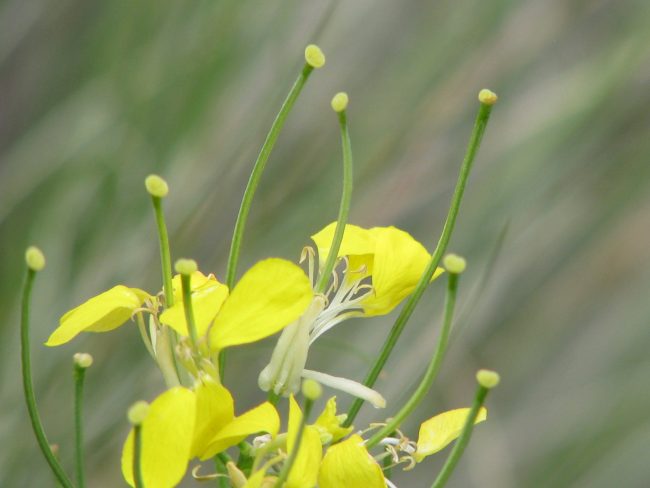
Erysimum asperum They’re typically single pompoms of yellow popping up around the grasslands, but the plants sometimes branch and find more elaborate forms. The one above is on a rich patch along the pasture fenceline, next to one of Jake’s poop piles (he’s very organized, likes to keep his sh*t together). Western wallflower is the…
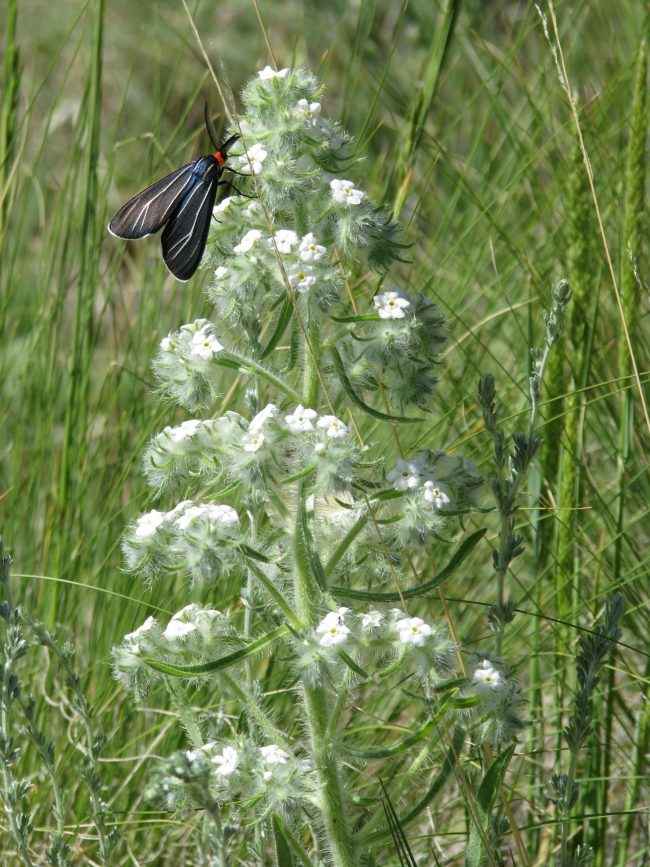
Cryptantha thyrsiflora Although it looks softly inviting, this plant’s covering of fine hairs is more bristle than fuzz. If you yield to the temptation to touch one, you’ll only do so once, at least on purpose: the experience is closer to stinging nettle than velvety lamb’s ear. For that reason, I’m not keen on them…
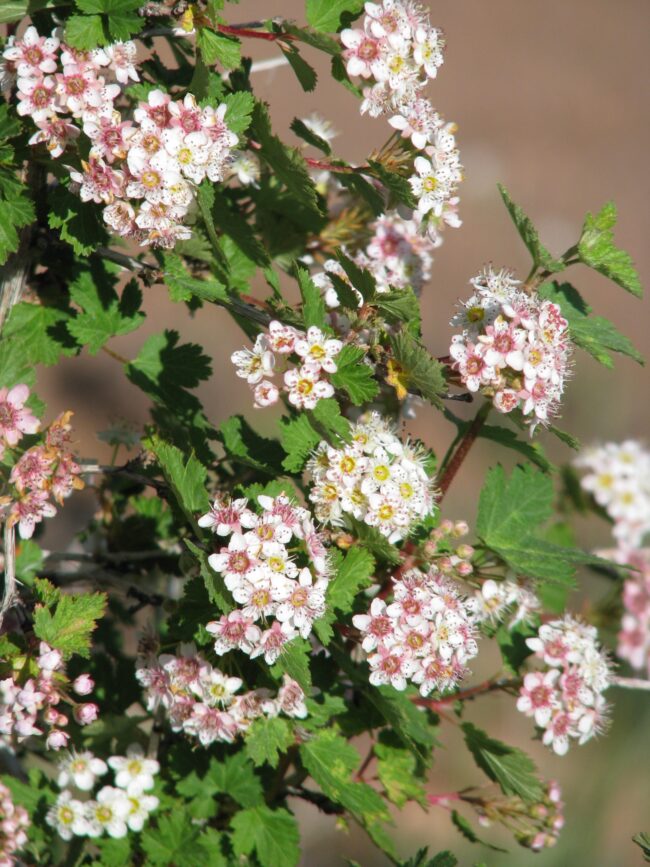
Physocarpus monogynus As charming as this flowering shrub is, you’d think I would have learned its name long ago, but I didn’t look it up until last year. “Ninebark” comes from the belief that the shrub’s shredding bark consisted of nine layers. Near the house, they are low bushes under the pines, but I’ve seen…
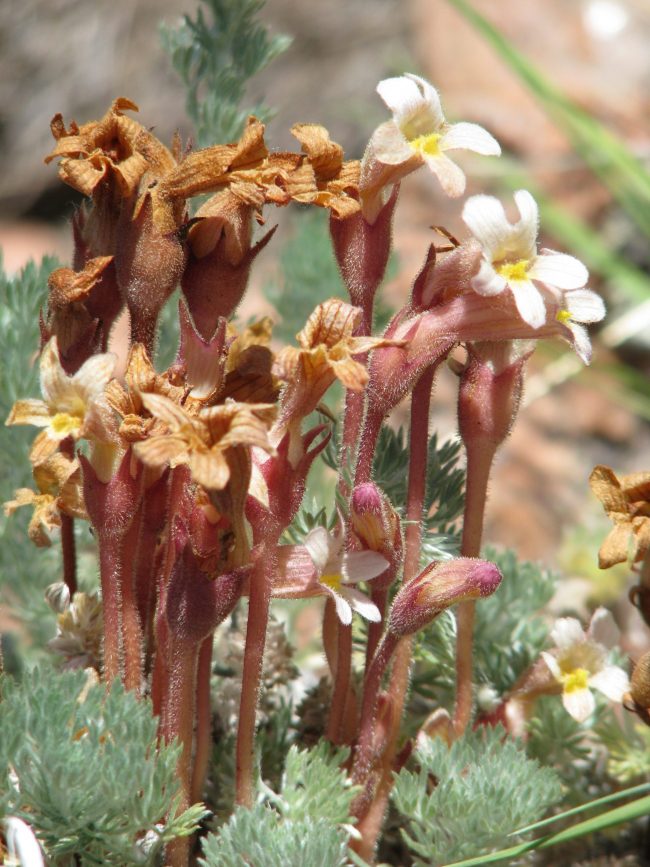
This was a rare treat; I’m not sure I’ve ever seen this cool-looking little plant before. The plants are parasitic, and this one is most likely dependent on the fringed sage (Artemisia frigida) you see growing at the base (silvery green foliage around the pink stems). For scale, the cluster was no more than four…
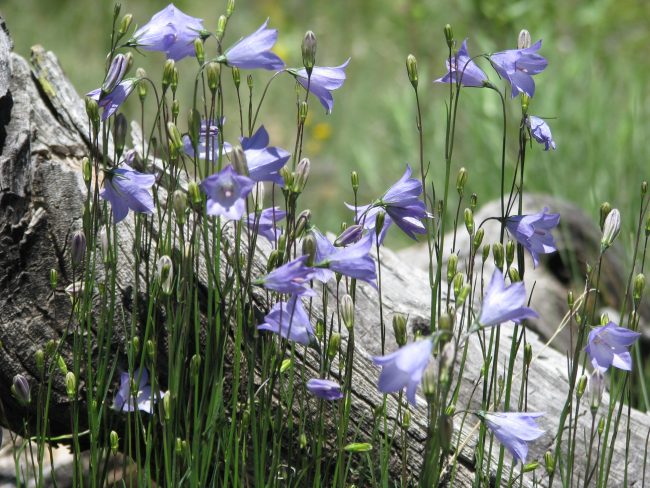
My field guide gives the common name as “Common Harebell,” but in my opinion there’s nothing common about them (okay, other than that they’re common (as in frequently seen, particularly this summer)). Pretty, pretty, pretty: And this year, more than I’ve ever noticed before, growing in dense clumps… …with more to come. Campanula rotundifolia